

To my surprise, Nothing will begin shipping its first AI-native device in December, CEO Carl Pei announced on X, ending months of speculation about the British company’s move beyond smartphones and audio products.
The product will have no screen, and Pei stressed that its function could not be replicated by a software application.
In the X post, Pei wrote:
“Our first AI-native product ships next month. It’s a tool, but one built with the personality and care that have come to define a Nothing product. It has no new screen, and it couldn’t have been an app”.
The phrase “no new screen” suggests the device may connect to an existing display, like a smartphone, instead of functioning completely without one.
But still it will be a screenless AI device!
The announcement came alongside a longer X article titled “Toolmakers,” in which Pei argued that the tech industry’s pursuit of a single “iPhone of AI” is premature.
“Looking for the iPhone of AI today is a dead end,” he wrote, adding that AI’s product-market fit will first appear in productivity tools that help people complete specific tasks.
Pei also identified a “context gap” as the central limitation of current AI systems.
Models, he argued, are capable enough, but they lack the everyday context that never reaches a chat box: a passing comment, an idea over coffee, a moment that disappears before a user can type it into a phone.
We don’t have any other information yet, like the device’s name, price, specifications, or exact shipping date within December.
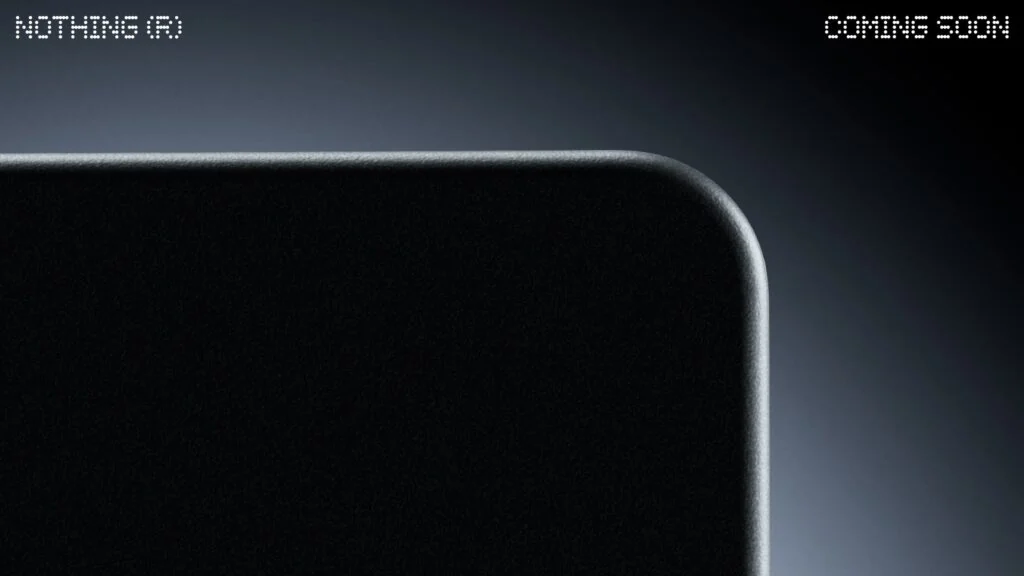
The teaser image Pei shared with the post shows only a black, rounded corner with a textured edge, offering little clue about the device’s design.
It looks like it can be a note-taker or ambient recorder, given Pei’s emphasis on capturing real-world context.
Pei’s post positions the device as a workplace tool rather than a mass-market companion, drawing a contrast with earlier AI hardware such as the Humane AI Pin and the Rabbit R1, both of which struggled to justify their existence as dedicated hardware.
Nothing’s move comes as several companies, including OpenAI, are exploring screenless AI devices.
Whether Nothing’s productivity-first framing and its design-led approach will produce a more durable product than its predecessors will become clearer once the device ships in December 2026.
