You finish Gaslit and you ask a simple question. Where did the real Jay go after his mother died?
The answer is quieter than the show suggests. Clyde Jay Jennings did not vanish in a scandal, did not die young, did not chase fame. He cared for his mother in her last two years, worked inside the federal government in Washington, then stepped out of public view and stayed there.
The Short Answer You Came For
If you want the core facts first, here they are.
- Full name: Clyde Jay Jennings, known as Jay Jennings
- Born: 1947 in New York, with November 2, 1947 listed in several biographical records
- Parents: Martha Mitchell and Clyde Jennings Jr., stepson of John N. Mitchell, half brother to Marty Mitchell
- Married: Janis Crawford in September 1974 in Tylertown, Mississippi
- Work: Researcher for a U.S. Senate subcommittee in 1976, then a U.S. Government Accountability Office investigator in Washington in the 1980s
- Last confirmed public trace: Listed as living in Woodbridge, Virginia in his father’s 2006 obituary
- Status in November 2026: No verified obituary, death record, interview, or social media account for Jay himself has surfaced
The public record gives you a clear early life, a clear role in his mother’s final years, a clear federal career in the 1980s, then silence. It’s simply about a man who watched his mother get turned into a national punchline and decided he did not want the same life.
Who Clyde Jay Jennings Was Before the Cameras Found His Mother
To understand Jay, you have to start before Watergate, before John Mitchell, before the phone calls to reporters that made his mother famous. You have to start in Pine Bluff, in Lynchburg, and in a small house in Rye, New York where two very different families briefly joined.
Clyde Jay Jennings was born on November 2, 1947, and he turned 79 in November 2026.
His early home was Rye, New York. Martha and Clyde moved there after their wedding in Pine Bluff on October 5, 1946. Some retellings place his birth in Queens, where the couple also spent time in the New York area.
However, you do not need a street address to see the shape of that childhood. It was stable for a decade, then it broke.
His Father, Clyde Jennings Jr.
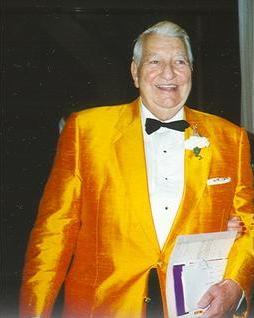
Clyde Jennings Jr. came from Lynchburg, Virginia. He served as a U.S. Army officer in World War II, worked in intelligence, and retired from the Army Reserves as a colonel. After his discharge, he worked as a traveling handbag salesman, then as a manufacturer’s representative for Vera Sportswear in New York City and later for The Citrus Growers.
In his later years he became a well known figure in philately, the world of stamp collecting. He served as president of The Society of Philatelic Americans, served on committees for the American Philatelic Society, and received the Luff Award for Exceptional Service to Philately in 1989.
People who knew him described a colorful, funny, generous mentor who pushed stamp collecting for young people.
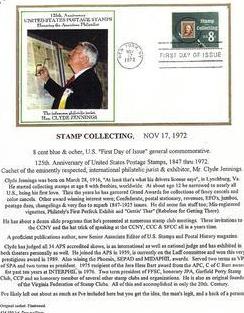
He lived to 90. He died on May 17, 2006 in Jacksonville, Florida.
His obituary in the Florida Times Union listed one survivor that matters for this story: his son Clyde Jay Jennings of Woodbridge, Virginia.
That line is the last solid public anchor we have for Jay’s location. It also tells you something about the father and son bond. Clyde Jr. had outlived two wives, Martha Elizabeth Mitchell and Frances McCarty Jennings. His son was still listed first among survivors.
His Mother Before John Mitchell
Martha Elizabeth Beall was born on September 2, 1918 in Pine Bluff, Arkansas. Her father George V. Beall worked as a cotton broker. Her mother Arie Ferguson Beall taught speech and drama for fifty years in the Pine Bluff schools.
Martha graduated from Pine Bluff High School in 1937, studied at Stephens College in Missouri and the University of Arkansas, then finished a BA in history at the University of Miami.
She taught seventh grade for a year in Mobile, Alabama, hated it, returned to Pine Bluff, then took a secretarial job at the Pine Bluff Arsenal.
Six weeks later she was transferred to Washington, D.C. with her boss, Brigadier General Augustin Mitchell Prentiss. That transfer changed her life. In Washington she met Clyde Jennings Jr. They married in Pine Bluff on October 5, 1946.
Martha and Clyde separated on May 18, 1956. They divorced on August 1, 1957. Martha later said Clyde spent long stretches away from home. That distance, in her telling, wore the marriage down. You can read that as a small, human detail, not a scandal. A traveling salesman and a young mother in Rye, with a son under ten, living lives that kept pulling apart.
The House in Rye and the First Break
Jay spent his first ten years in that Rye household. He was ten when his parents separated, eleven when the divorce became final.
Five months later, on December 30, 1957, his mother married John N. Mitchell, a Manhattan lawyer who earned a high income and moved the family into a home on the grounds of the Apawamis Club in Rye.
For Jay, that meant a new stepfather, a new household, and a new last name in the headlines, even if his own last name stayed Jennings.
John Mitchell and Martha had one child together. Martha Elizabeth Mitchell Jr., called Marty, was born on January 10, 1961. Jay was fourteen when his half sister arrived. The family sent Marty to Catholic school, not because they were Catholic, but because Martha believed the discipline was stronger. She wanted structure for her children, even as her own public life grew louder and less structured.
Many quick biographies call Jay the son of Martha and John Mitchell. He was not. He was the son of Martha and Clyde Jennings Jr. John Mitchell was his stepfather. Many biographies also call Jay Martha’s only child. He was not that either. He was Martha’s only son and her first child. Marty was her second child and her only daughter. Keep those two facts straight and much of the confusion online clears up, so you will understand the next information we documented here.
June 1972: The Week That Split the Family Open
John Mitchell managed Richard Nixon’s successful presidential campaign in 1968. Nixon appointed him Attorney General in 1969. The family moved to Washington, D.C. and into the Watergate complex. Martha became famous fast.
By November 1970, a Gallup poll found 76% of Americans recognized her name. She appeared on talk shows, on Laugh-In, on the cover of Time.
Reporters called her Martha the Mouth and The Mouth of the South. She called reporters at night with gossip and with details she had picked up from rifling through her husband’s papers or listening in on his calls.
That habit made her popular and made her dangerous to the people around Nixon.
Newport Beach and the Phone Call
A week before the June 17, 1972 break-in at the Democratic National Committee headquarters in the Watergate office building, John and Martha traveled to Newport Beach, California for fundraising events.
John got a call about the break-in, held a press conference denying any involvement by the Committee to Re-Elect the President, then returned to Washington. He encouraged Martha to stay in California. He enlisted former FBI agent Steve King, their security agent, to keep her from learning about the break-in or contacting reporters.
Martha got a copy of the Los Angeles Times. She saw that James W. McCord Jr., the security director for the Committee to Re-Elect the President and her daughter’s bodyguard and driver, was among those arrested. That detail clashed with the White House story that the break-in had nothing to do with the campaign. She tried to reach her husband by phone. She told one of his aides that her next call would be to the press.
On the night of June 22, she called Helen Thomas of United Press International, her favorite reporter. She said she planned to leave her husband until he resigned from the Committee to Re-Elect the President. The call cut off abruptly. When Thomas called back, the hotel operator said Martha was indisposed and could not talk. Thomas called John Mitchell. He told her Martha gets a little upset about politics, but she loves me and I love her and that is what counts.
Thomas later reported that someone had taken the phone from Martha’s hand. Martha could be heard saying, You just get away. Days later, Marcia Kramer of the New York Daily News tracked Martha to Rye and found a woman with black and blue marks on her arms. Martha said she had been held captive in California, that King had pulled the phone cord from the wall, that she had tried to escape from a balcony, that five men had restrained her, that she needed stitches, that a doctor called by Nixon’s personal lawyer Herbert W. Kalmbach had injected her with a tranquilizer. She said she feared for her life.
The Smear That Followed
The major papers treated her account as a human interest story, not a front page investigation. Nixon aides told the press she had a drinking problem. That part was true. She did drink. They also suggested she was convalescing in Silver Hill Hospital, a psychiatric facility in Connecticut. The message was simple: do not believe her. She is unstable. She is drunk. She is imagining things.
Jay was 24 in that summer. He was not in California. He was not part of the security detail. He was not quoted in those first frantic days. The record does not show him defending his mother in public in June 1972. That matters because it corrects the Gaslit version where the son is front and center from the start. In real life, his public role came later, after the family had already split and after his mother was already isolated.
In February 1975, McCord, by then convicted for his role in the break-in, admitted Martha had been basically kidnapped and confirmed her story. Nixon later told interviewer David Frost in 1977, If it had not been for Martha Mitchell, there would have been no Watergate. The vindication came too late to repair her life.
The Son Who Stayed When Almost Everyone Else Left
John Mitchell resigned from the Committee to Re-Elect the President soon after the break-in, citing a wish to spend more time with his family. In May 1973, Martha gave sworn testimony in a deposition in the Democratic Party’s $6.4 million civil suit against the Committee.
In September 1973, John suddenly moved out of the family home with Marty. The couple separated. They never saw each other again.
On January 1, 1975, John was convicted of perjury, obstruction of justice, and conspiracy for his role in the Watergate break-in and cover-up. He served 19 months in federal prison.
Martha was left without funds, without friends in the old circle, and without custody of her daughter. John won custody of Marty after a public legal fight. Marty sided with her father in the years that followed. Martha fought to change the custody outcome and lost.
That loss cut deep. It also explains why Jay’s loyalty stands out so sharply in the record. Most of her family pulled away. Jay did not.
The Wedding in Tylertown
Jay studied law at the University of Mississippi. There he met Janis Crawford of Tylertown, Mississippi. Both reportedly dropped out of college at some point. They married at the First Baptist Church in Tylertown in September 1974.
Getty Images dated the wedding photos to September 1, 1974. Janis was 22. Jay was 26. Martha attended.
She arrived fashionably late because of a flat tire. The couple planned to live in Washington, D.C. A newspaper account from that week described Jay as Martha Mitchell’s son by a previous marriage to Clyde Jennings Jr. of Jacksonville, Florida. That line, printed in 1974, is one of the few contemporary descriptions that gets the parentage right.
We do not know whether Jay and Janis are still married, whether they have children, or where Janis lives now. No verified public record answers those questions. That absence is proof that Jay kept his private life private after 1976.
The Final Two Years With His Mother
In 1975, Martha fell ill with multiple myeloma, a cancer of the plasma cells in the bone marrow. Her health declined fast. Her lawyer in an ongoing alimony dispute described her as desperately ill, without funds and without friends. A small circle stayed close, including reporter and biographer Winzola McLendon. Jay became part of that circle. He cared for his mother and served as her occasional spokesman. That role meant taking calls, giving updates, and shielding her when she was too sick to talk.
You can see the shift in tone in the 1976 obituaries. The San Francisco Chronicle listed her survivors as a son, Jay Jennings, 28, a researcher for a U.S. Senate subcommittee, and a daughter, Marty, 15, who attended a private school in Connecticut.
The Washington Post noted Jay as the person who spoke for her. He was not a celebrity son cashing in. He was a 28 year old son answering the phone for a dying mother who had been abandoned by Washington.
The Funeral in Pine Bluff
Martha slipped into a coma and died on May 31, 1976 at Memorial Sloan Kettering Hospital in New York City. She was 57. Her funeral took place at First Presbyterian Church in Pine Bluff, her hometown.
Jay, John, and Marty entered through a side door after the service had started. One news account said Jay fought back tears and swallowed hard as he faced the closed steel casket. He had been the last to see her, on the Saturday before she died. He told a reporter by phone that she was like a little girl in her final days, a line that reads as tender and exhausted at the same time.
An anonymous donor sent a large arrangement of white chrysanthemums that spelled Martha was right. No one ever learned who sent it. Martha was buried in Bellwood Cemetery in Pine Bluff with her mother and grandparents.
John, because he was still legally her husband, closed the service to the public. Only a handful of mourners attended inside. Pine Bluff residents, fans, and press lined the streets outside anyway.
A Timeline You Can Check in Two Minutes
| Year | What Happened | What It Meant for Jay |
|---|---|---|
| 1946 | Martha Beall married Clyde Jennings Jr. in Pine Bluff | Jay’s parents formed the household he was born into |
| 1947 | Clyde Jay Jennings was born in New York | He became Martha’s first child and only son |
| 1956 to 1957 | Martha and Clyde separated, then divorced | Jay was ten at separation, eleven at divorce |
| 1957 | Martha married John N. Mitchell | Jay gained a stepfather who later became Attorney General |
| 1961 | Marty Mitchell was born | Jay gained a half sister at age fourteen |
| 1972 | Watergate break-in and Martha’s California confinement | Jay was 24 and stayed out of the first public storm |
| 1973 | John Mitchell left home with Marty | Jay watched his mother lose custody and support |
| 1974 | Jay married Janis Crawford in Tylertown | He started adult life in Washington |
| 1975 to 1976 | Martha was diagnosed with multiple myeloma, then died on May 31, 1976 | Jay cared for her and spoke for her |
| 1980 | Jay worked as a GAO investigator in Washington | He built a federal career away from the spotlight |
| 2006 | Clyde Jennings Jr. died at age 90 in Jacksonville | Jay was listed as living in Woodbridge, Virginia |
| 2022 | Gaslit premiered on Starz | A fictional Jay put the real Jay back in searches |
| 2026 | Jay turned 79 in November | No verified death record or new interview has surfaced |
What Jay Did After His Mother Died
Senate Researcher, Then GAO Investigator
At the time of his mother’s death, Jay worked as a researcher for the Senate Subcommittee on Internal Security. That job put him inside Washington, not outside it. He knew how committees worked, how records moved, how statements were shaped. That background makes his later silence more interesting. He understood the press. He chose not to use it.
By January 1980, he worked as a U.S. Government Accountability Office investigator in Washington. The GAO, then called the General Accounting Office, audits federal spending and investigates waste and fraud. It is the kind of job that rewards patience, paper trails, and discretion. It is also the opposite of his mother’s public life. She called reporters at night. He wrote reports that few people outside government ever read.
The 1980 Auction and the Baby Grand Piano
On January 15, 1980, Washington Post columnist Maxine Cheshire reported that a storage company had auctioned off things that belonged to Martha Mitchell in Manhattan. The company said it had reached out to John Mitchell. John reportedly replied that he did not want to do anything with Martha’s belongings. Jay was upset. He told the Post that most things Martha had acquired during her marriage to John were sold when she died.
Jay then drew a line that tells you how he saw his mother’s two marriages. He said, Mitchell bought my mother a baby grand piano, and it was worth 10,000 dollars to 15,000 dollars. Was it hers or his when he sold it? You can find lawyers to argue either way. But these other things were from her earlier marriage. In that quote you hear a son protecting what was left from his mother’s first life, the life before Watergate, before John Mitchell, before the cameras. He was not arguing about money alone. He was arguing about what belonged to Martha before she became Martha Mitchell the headline.
Where Is Clyde Jay Jennings Now in 2026?
The Last Confirmed Trace: Woodbridge, Virginia in 2006
The last time a primary source places Jay in a specific town is 2006. His father’s obituary lists him as Clyde Jay Jennings of Woodbridge, Virginia. Woodbridge sits in Prince William County, about 25 miles south of Washington, D.C. It is a quiet suburb, a place where a former federal investigator could live without attention. That fits the pattern of his life after 1980. He stayed near Washington, but not in it.
After 2006, the trail goes cold in public records. No new interview appears. No book, no podcast, no documentary credit lists him as a participant. No verified social media account carries his name. People search sites list a Clyde Jay Jennings in Woodbridge with old phone numbers and old addresses, but those listings mix the father and the son and mix old data with new guesses. You should not treat a people search listing as proof of a current address. Those sites recycle data and often merge two people with the same name, so these are not reliable data sources.
Why You Will Not Find New Photos or Interviews
Jay was 59 when his father died. He was already out of public life for more than two decades. He had no reason to return for a 2006 obituary, for a 2022 television show, or for a 2024 podcast. He had already given his statement in the only way that mattered to him. He stayed. He spoke for his mother when she could not speak for herself. He protected her belongings when a storage company sold them. Then he stopped. If you expect a man who made that choice to suddenly start posting life updates at 79, you are expecting a different person.
Is He Alive? What We Can Say and What We Cannot
We can say this with confidence. No verified obituary for Clyde Jay Jennings has been published. No death record, no cemetery listing, no news report of his death has surfaced in the sources that track Martha Mitchell’s family. If he had died, his father’s philately community, which kept detailed guest books and memorials in 2006, would likely have noted it. The absence of a death notice is not proof of life on its own. It is, combined with his long privacy, the strongest signal we have.
We cannot say where he lives now, if he is married now, if he has children or grandchildren, or how his health is. Those details belong to him. He never sold them. He never offered them to a magazine. He never used his mother’s name to build a brand. That restraint is part of why the internet keeps asking about him. People expect a Watergate child to have a Watergate memoir. Jay never wrote one.
If you count from November 2, 1947, he turned 79 in November 2026. He would be 79 years old today, living, as far as the public record shows, outside the spotlight he watched consume his mother.
Gaslit vs Real Life: What the Show Got Right and What It Invented
Gaslit premiered on Starz in April 2022. It was based on the first season of the Slow Burn podcast. Julia Roberts played Martha. Sean Penn played John. Johnny Berchtold played Jay Jennings in two episodes, first appearing in episode five, titled Honeymoon. The show also inspired a separate Netflix documentary, The Martha Mitchell Effect, released in June 2022. People often mix the two. Gaslit is drama. The documentary is nonfiction. Jay appears as a character in the drama, not as a speaker in the documentary.
The Estrangement Was Real, But the Timing Was Different
Gaslit shows Martha as estranged from Jay for much of the story. That estrangement had roots in real life. Jay grew up, left Rye, went to law school in Mississippi, married, and built a life in Washington. He was not living at home during the Watergate years. He was not in the house when the phone cord was pulled. The show compresses that distance into dramatic scenes. Real life stretched it across years, across states, across a custody fight that pulled the family in opposite directions.
What the show gets right is the return. In the final episodes, Jay comes back to care for his mother. That matches the record. He did come back. He did serve as her spokesman. He did stand at her funeral and fight back tears. The show invents dialogue and invents scenes to make that return feel sudden. Real life made it slower, quieter, and harder to film. A son answering the phone, driving to a hospital, talking to a storage company, does not look dramatic on screen. It is dramatic in real life because it is the only kind of loyalty that lasts.
Johnny Berchtold’s Version Is Not a Biography
Berchtold was 27 when he played Jay. The real Jay was 24 in 1972 and 28 in 1976. The ages are close enough that the casting feels plausible. The character is not a biography. He is a composite built to show you what it felt like to be Martha’s son. He shows the embarrassment, the love, the pull to protect a mother who embarrassed Washington. If you watch Gaslit and think you now know Jay, you know a version. If you read the obituaries, the wedding notice, the 1980 Washington Post quote, and the 2006 obituary, you know the man.
The Family Around Him, in Brief
You cannot tell Jay’s story without the three people who shaped it.
Martha Mitchell, 1918 to 1976
Martha was the most famous woman in Washington in 1970 and the most dismissed woman in Washington in 1972. She warned America about dirty tricks, about a break-in tied to the campaign, about being held and drugged to keep her quiet. She was called crazy. She was called drunk. She was called a mouth. She was right about the core facts. Psychologist Brendan Maher coined the term Martha Mitchell effect in 1988 to describe what happened to her: a clinician mistakes a patient’s true account of real events for a delusion and misdiagnoses accordingly. That term now appears in psychology textbooks and medical journals. It is the most lasting label from her life, more lasting than any nickname the press gave her.
John N. Mitchell, 1913 to 1988
John Mitchell was Martha’s second husband, Jay’s stepfather, and Marty’s father. He served as Attorney General from 1969 to 1972, then headed the Committee to Re-Elect the President. He was convicted in 1975 and served 19 months. He never saw Martha again after he left home in September 1973. He attended her funeral in Pine Bluff, arriving late with Jay and Marty through a side door. He died in 1988. His legacy in Jay’s story is simple. He took Marty. He left Martha without support. He refused Martha’s belongings in 1980. Jay held all three in his memory.
Marty Mitchell, Born 1961
Marty Mitchell, full name Martha Elizabeth Mitchell Jr., was Jay’s half sister. She was 15 when her mother died. She attended Stone Ridge Country Day School in Bethesda, Maryland, then Georgetown University. She worked as an associate with Dean and Associates, a consulting firm in real estate in Washington. In March 1989, a marriage notice announced her engagement to Paul James Savidge of Silver Spring, Maryland, a Georgetown graduate who earned his law degree from Washington and Lee University. The marriage was set for September 1989. The notice was sent by her godparents, Mr. and Mrs. Kenneth C. Ebbitt. Beyond that notice, Marty, like Jay, has kept a low profile. The siblings shared a funeral entrance in 1976. They did not share a public life after it.
Clyde Jennings Jr., 1916 to 2006
We already met Clyde Jr. as Jay’s father. His later life deserves one more line because it shows where Jay came from. Clyde Jr. was not a Washington insider. He was a Lynchburg boy, a Virginia Episcopal School graduate, a World War II veteran, a salesman, a stamp collector who became a national leader in his hobby. He built a life in Jacksonville, Florida, served on county commissions, won a Man of the Year award from a local business club, and kept friends across the country. His guest book after his death filled with notes from philatelists who called him a mentor, a gentleman, a second father. One friend wrote that Clyde was proud of Jay. That line, tucked in a guest book, is one of the few times anyone in public said what the father felt about the son.
The Quiet After the Noise
Jay Jennings did not try to correct the record with a book. He did not try to sue the people who smeared his mother. He did not try to turn Gaslit into a speaking tour. He did something rarer. He showed up when his mother was dying, spoke when she could not, stood at her funeral and cried, argued over her piano when a storage company sold it, then went back to work. He worked for the Senate. He worked for the GAO. He lived in Woodbridge. He buried his father. He stayed out of the story that had consumed his family.
If you came here looking for a scandal about the son, you will leave without one. If you came here looking for proof that someone in Martha Mitchell’s family believed her when Washington did not, you have it. Her son believed her. He proved it in the only way that counts in a family. He stayed. He spoke. He kept her name attached to the truth, not to a joke. In 2026, at 79, he still holds the one thing Watergate never gave his mother: the right to be left alone.